
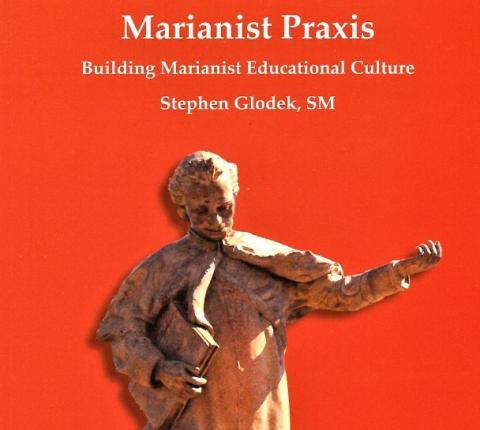
Both the book (available to purchase here) and the guide were written by Stephen Glodek, SM, a former provincial of the Society of Mary Province of the United States.
Click here for a downloadable PDF version of this reading guide.
Description
This reading guide is divided into three sections:
- Articulating Marianist Culture
- Identifying Marianist-Educated Persons and Culture
- Providing Formation with a Wide Net
Each section provides a different focus on building Marianist Educational Culture. This reading guide can used individually or for small group discussion.
Introduction
“If I had to name the culture a Marianist milieu of family spirit denotes, it is a culture of home. Our educational ministries are meant to be safe homes where lessons are learned, discipline imparted, faith nurtured, and the whole person educated—in body, mind, and spirit.”
—Stephen Glodek, SM
Based on the book, Marianist Praxis: Building Marianist Educational Culture by Stephen Glodek, SM, we will look at building a culture within Marianist sponsored ministries that promotes the vision of Blessed William Joseph Chaminade for our times. We will also build a profile of what characteristics make up a Marianist-education person. And, we will discuss why the formation of school boards, families of students, alumni/alumnae, and administrators is key to building this culture of home.
Section One
“Those who are dedicated directly to teaching make a mistake, if they limit their efforts to instructing in the human disciplines, if they only worry about producing scholars or gaining fame. Do not forget that you are Mary’s missionaries. Do not reduce yourselves to running learning factories.”
-Blessed William Joseph Chaminade
Topic: Articulating Marianist Culture
Required Reading:
- Chapter 7 – Conclusion – p. 47-48
- Chapter 1 – A Marianist Perspective pp. 1-6
- Chapter 6 – p. 27-29
Questions for Reflection:
- Describe some attributes of Marianist culture that you have observed in your school or ministry.
- After reviewing the Characteristics of Marianist Education (p. 4) justify how they contribute to establishing a Marianist culture. (Defining culture as: “. . . the learned and shared values, beliefs, and attitudes which shape and influence both perception and behavior.” (p. 2)
- The reading in chapter 6 describes the five key elements in all Marianist formation programs. Point out what you see as a common thread in these elements and explain the importance of that thread for Marianist formation and education.
- Reread the quote by Vincent Vasey SM, (p. 47). Describe how your particular ministry imitates the spirit of Blessed Chaminade in adaptability and originality.
Suggested Activity: Find pictures, artwork, quotes, or pieces of writing that illuminate this week’s topic for you. Explain what struck you about this particular piece of creative work.
Supplementary Reading: http://www.marianistngo.org
Section Two
“What a grand vision we have been given! You have been called stewards of a great tradition. But sometimes stewards of great traditions can become museum keepers. Yours is not a call to tend museums, but a call to be leaders in translating the Marianist culture into our times and your institutions.”
-Stephen Glodek, SM
Topic: Identifying Marianist-Educated Persons and Educators
Required Reading:
- Chapter 2 – The International Scope of Marianist Education, pp. 7-10
- Chapter 3 – Profile of Marianist-Educated Persons pp. 11-14
- Chapter 6 – p. 30-40
Questions for Reflection:
- Describe a significant Marianist characteristic or trait you have observed in the educators or formators within your Marianist institution.
- Outline how “Chaminade’s Understanding of Teacher Training” (pp. 30-32) prepares and supports educators in their formation of students today (pp. 35-40).
- Relate how the indicators of a Marianist-Educated person (chapter 3) form “people of integrity, honesty, fortitude, and justice in their personal and community lives.” (Glodek, p. 13)
- Using examples of the readings how are Marianist-Educated persons prepared to accept this challenge: “The transformation of the world occurs not simply by providing education, but by providing education for leaders who will influence areas of society far beyond what the Marianist educational experience can touch.” (Glodek, p. 32)
Suggested Activity: This discussion board is a place for you to upload and share pictures, artwork, quotes, or pieces of writing that illuminate this week’s topic for you. Explain what struck you about this particular piece of creative work.
Supplemental Reading: “Death of a Hired Man” by Robert Frost, reading: https://www.youtube.com/watch?v=WgRYqX3viEk (home described at 5:40)
Section Three
(Marianist sponsored ministries) are meant to become an authentic community. Teachers parents, and students must work together, enrich one another, and help one another grow as Christian persons.”
-Marianist Rule of Life
Topic: Providing Formation with a Wide Net
Required Reading:
- Chapter 4 – Why Marianist Educational Institutions pp. 15-18
- Chapter 5 – The Educational Community pp. 19-24
- Chapter 6 – Formation of Our Partners in Marianist Education pp.40-46
Questions for Reflection:
- What is your definition of “transformation?” Relate where you have witnessed transformation in your ministry.
- The Vision and Journey, Document of the General Chapter of 1986 states that “The school is the meeting place of culture and faith par excellence. It allows faith to become incarnate in a culture, and it enables culture to give a language to faith.” Do you agree with this premise? Defend your response using examples from the readings.
- Tell why or why not the formation board members, students’ families, and alumni/alumnae in Marianist culture and tradition is important.
- Glodek writes, “If I had to name the culture a Marianist milieu of family spirit denotes, it is a culture of home.” (p. 22) Explain why creating a culture of home supports the Marianist goal of “transforming the world into Jesus Christ.”
Suggested Activity: This discussion board is a place for you to upload and share pictures, artwork, quotes, or pieces of writing that illuminate this week’s topic for you. Explain what struck you about this particular piece of creative work.
About the Author: Brother Stephen joined the Society of Mary in 1967. He served in Marianist secondary schools in New York as teacher, counselor, and administrator. He is the former Provincial of the Society of Mary’s Province of the United States and currently ministers as Director of the Province’s Office of Formation for Mission. This work is one part of a collection of international publications by the General Office of Education of the Society of Mary, tentatively titled Marianist Education: Tradition and Venture.