
Editor's Note: LeeAnn's article stems from her involvement in Marianist Studies Program 2.0, a year-long assisted inquiry into the topic of the Five Silences: Marianist Mindfulness for the Twenty-First Century, which was conducted by NACMS in 2017-18.
Click here for a downloadable PDF version of this article.
Dear Parents:
Thank you for taking time to consider building a Marianist foundation for your family. Thank you for showing an interest in your family’s spiritual life and a desire to form your children in virtue. Your love and commitment to your family already are evident.
This project is an attempt to share a part of Marianist spirituality with parents by providing practical examples of how to be mindful in daily life, following the Marianist Founder, Father William Joseph Chaminade’s, method of the Five Silences. These silences offer a challenge for individuals to grow closer to Christ through their words, signs, mind, passions, and imagination. Chaminade believed that virtues could be best practiced with the support of a faith community. While some of us may be part of a faith community like Chaminade envisioned, we also can practice these virtues in daily life as part of our family community—our own domestic church. Personally, I hoped that by studying the Five Silences, I would be more intentional about the decisions I make in everyday life and model a mindful behavior and attitude for my family.
Right now, my family includes my husband and our 3-and-a-half-year-old and 18-month-old sons, with another baby arriving very soon. We quickly realized that there are very few “right” answers in parenting. There are few times when we see immediate results or receive instant gratification for our decisions about how to raise our children. Therefore, everything in this booklet is simply an invitation—nothing is meant to impose expectations, evoke guilt, or provide a guarantee. These are options, ideas, and resources that can hopefully help parents and families draw closer to Christ through their words, signs, mind, passions, and imagination. Chances are, you already may engage in a lot of these activities or exercises, but perhaps this booklet can encourage you to approach them differently or invite your children into an intentional conversation. There is no particular order and no expectation that each and every activity is completed exactly as described, because so much depends on children’s ages and levels of understanding. This is intended as a resource and opportunity to do what works for your family. Challenge your family to grow and support one another, but also be realistic based on your needs and goals.
Parenting and developing virtues are both journeys and processes that likely will extend throughout our entire lifetime. Hopefully we can cultivate some practices along the way that help us sense the presence of God and draw us closer to Christ through the grace of the Holy Spirit and the model of Mary, our Mother.
Thank you again for considering this booklet. Your example as faith-filled, intentional, and mindful parents is needed in our world today. Thank you especially to all of the parents and members of the Marianist Family who provided examples, stories, and inspiration for this compilation.
LeeAnn Meyer
Overview: Family Life and the Five Silences
It is fun to think about the future of our children and to watch their behaviors and tendencies as infants and toddlers and wonder how these will develop into interests and talents later in life. Maybe we have specific dreams for them, but perhaps we just hope they will be healthy and happy. As Susan Vogt, a lay Marianist, says in her book Raising Kids Who Will Make a Difference, “in the end, I think our greatest hope is that our children will be people of integrity who know how to genuinely love.” However, she goes on to say that as parents “we can never control how our children turn out. That is up to them. We are responsible for the process we use in parenting, not the outcome.” [1]
Even though we cannot be completely responsible for the outcome, the Lord entrusts us to do our best with the process. Today’s world and the current society present many struggles as we try to help our children fulfill their greatest potential and be who God is calling them to be. Pope Francis acknowledges this challenge in The Joy of Love when he says, “Raising children calls for an orderly process of handing on the faith. This is made difficult by current lifestyle, work schedules, and the complexity of today’s world, where many people keep up a frenetic pace just to survive. Even so, the home must continue to be the place where we learn to appreciate the meaning and beauty of the faith, to pray and to serve our neighbor.” [2]
While there are many parenting books, best practices, and opinions about how to raise a family, the Five Silences are exercises, practices, or habits that can help us to form attitudes and dispositions that are in conformity with Jesus. [3] The Five Silences are not meant to completely silence our words, signs, mind, imagination, and passions, but rather to make us aware of them in order to silence the ones that are contrary to the love of God and to further develop those that imitate Jesus and Mary.
The following sections will offer prayers, reflections, discussions, and activities that help families understand each of the silences and live them. The family provides a safe and loving community to challenge and support each individual, regardless of age, in this journey. It is never too late to begin practicing these attitudes, nor is it too early to introduce the concepts to children. We have to start somewhere.
Silence of Words
Although parents may appreciate silence from words occasionally, developing this habit does not require a complete absence of words. Rather, Chaminade challenges us to use our words deliberately and purposefully. Silence of words means “moderation of our speech so everything we say serves some good purpose.” [4] This may mean refraining from harsh words and following the adage “if you have nothing nice to say, do not say anything at all.” It also may mean using our words to bring light to a specific situation, challenge an unpopular view, affirm our family members, express gratitude, or pray. Finally, it encourages us to listen first so we can understand others and ensure our words are meaningful. “Experience has taught us that we cannot develop our speaking into a virtue without learning how to listen.” [5] Overall, the virtue of silence of words is a reminder that our words carry a lot of power, and we should use them only in ways that imitate the love of Jesus and Mary.
Pope Francis explains that within the family, “three words need to be used. I want to repeat this! Three words: ‘Please,’ ‘Thank you,’ ‘Sorry.’ Three essential words!... The right words, spoken at the right time, daily protect and nurture love.” [6] How often do we truly reflect on the words we use on a daily basis? Perhaps when our children first start talking and unexpectedly repeat things we say, we have a newfound realization that we need to watch our language and choose our words carefully. Eventually this consciousness may wear off, however.
Let us renew our efforts to focus on our words. Let us increase our ability to listen to one another and to speak words that are meaningful, loving, and true. The following activities are options of how we can engage with words or think about words within our family. Please modify them as you feel is best for your family while remaining true to the virtue of silence of words.
Silence of Words in Scripture
There are references in Scripture that explain how we should use our words, and there are stories in the Gospels that share both Mary’s words and her times of silence. It is wonderful to read Scripture as a family, even if no one is a biblical scholar and even if it generates more questions than answers. The goal is to read the Scripture together and to contribute to a conversation as each one is able. While the passages are included here for your convenience, there also could be a ritual and symbolism in bringing a family Bible to your gathering space, allowing the kids to find the passages, and reading it straight from the Bible. Do whatever works best for your family!
Activities: Take a few minutes as a family to read one or more of these scripture passages. Depending on the ages of your children, you may read it more than once.
If your children are young, they could color or draw a picture of the story. You could elaborate on the images and help them understand what is happening.
With older children, ask everyone to share a word or phrase that sticks out to them. Talk about how each person understands the passage and how they would describe the language. [7]
James 1:19
You must understand this, my beloved: let everyone be quick to listen, slow to speak, slow to anger.
James 2:5-10
So also the tongue is a small member, yet it boasts of great exploits. How great a forest is set ablaze by a small fire! And the tongue is a fire. The tongue is placed among our members as a world of iniquity; it stains the whole body, sets on fire the cycle of nature, and is itself set on fire by hell. For every species of beast and bird, of reptile and sea creature, can be tamed and has been tamed by the human species, but no one can tame the tongue—a restless evil, full of deadly poison. With it we bless the Lord and Father, and with it we curse those who are made in the likeness of God. From the same mouth come blessing and cursing. My brothers and sisters, this ought not be so.
Matthew 6:7-13
When you are praying, do not heap up empty phrases as the Gentiles do; for they think that they will be heard because of their many words. Do not be like them, for your Father knows what you need before you ask him. Pray then in this way: Our Father in heaven, hallowed be your name. Your kingdom come. Your will be done, on earth as it is in heaven. Give us this day our daily bread. And forgive us our debts, as we also have forgiven our debtors. And do not bring us to the time of trial, but rescue us from the evil one.
Ephesians 4:29
Let no evil talk come out of your mouths, but only what is useful for building up, as there is need, so that your words may give grace to those who hear.
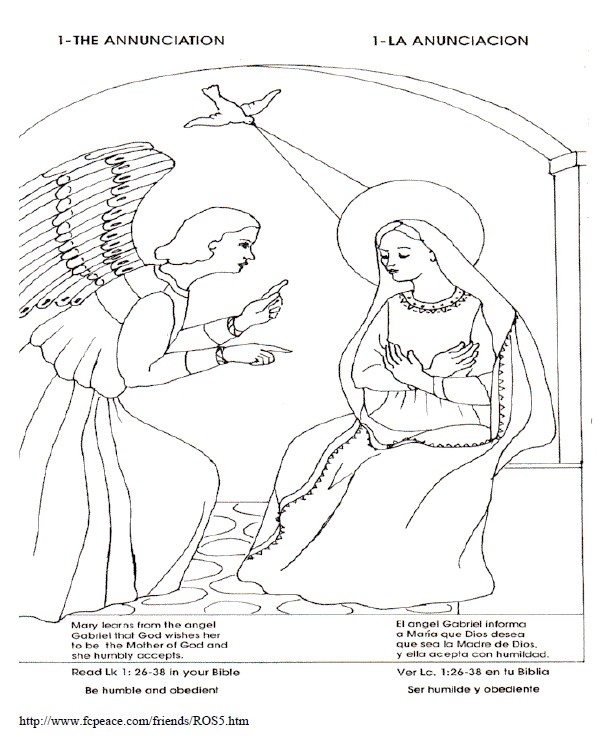
Luke 1:26-38 (Annunciation)
In the sixth month the angel Gabriel was sent by God to a town in Galilee called Nazareth, to a virgin engaged to a man whose name was Joseph, of the house of David. The virgin’s name was Mary. And he came to her and said, “Greetings, favored one! The Lord is with you.” But she was much perplexed by his words and pondered what sort of greeting this might be. The angel said to her, “Do not be afraid, Mary, for you have found favor with God. And now, you will conceive in your womb and bear a son, and you will name him Jesus. He will be great, and will be called the Son of the Most High, and the Lord God will give to him the throne of his ancestor David. He will reign over the house of Jacob forever, and of his kingdom there will be no end.” Mary said to the angel, “How can this be, since I am a virgin?” The angel said to her, “The Holy Spirit will come upon you, and the power of the Most High will overshadow you; therefore the child to be born will be holy; he will be called Son of God. And now, your relative Elizabeth in her old age has also conceived a son; and this is the sixth month for her who was said to be barren. For nothing will be impossible with God.” Then Mary said, “Here am I, the servant of the Lord; let it be with me according to your word.” Then the angel departed from her.
Luke 1:46-55 (Visitation)
And Mary said, “My soul magnifies the Lord, and my spirit rejoices in God my Savior, for he has looked with favor on the lowliness of his servant. Surely from now on all generations will call me blessed; for the Mighty One has done great things for me, and holy is his name. His mercy is for those who fear him from generation to generation. He has shown strength with his arm; he has scattered the proud in the thoughts of their hearts. He has brought down the powerful from their thrones and lifted up the lowly; he has filled the hungry with good things, and sent the rich away empty. He has helped his servant Israel, in remembrance of his mercy, according to the promise he made to our ancestors, to Abraham and to his descendants forever.”
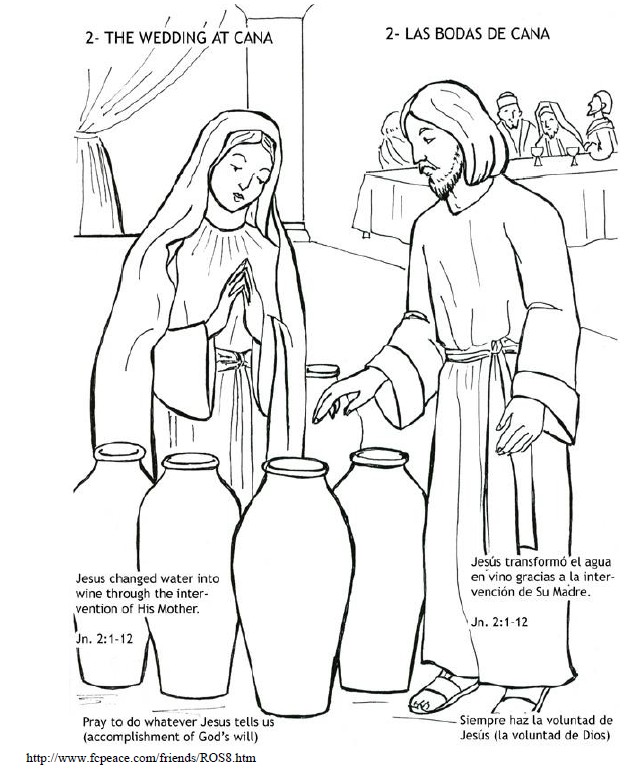
John 2:1-5 (Wedding at Cana)
On the third day there was a wedding in Cana of Galilee, and the mother of Jesus was there. Jesus and his disciples also had been invited to the wedding. When the wine gave out, the mother of Jesus said to him, “They have no wine.” And Jesus said to her, “Woman, what concern is that to you and to me? My hour has not yet come.” His mother said to the servants, “Do whatever he tells you.”
Acts 1:12-14 (Mary’s Silence in the Upper Room)
Then they returned to Jerusalem from the mount called Olivet, which is near Jerusalem, a sabbath day’s journey away. When they had entered the city, they went to the room upstairs where they were staying, Peter and John, and James, and Andrew, Philip and Thomas, Bartholomew and Matthew, James son of Alphaeus, and Simon the Zealot, and Judas son of James. All these were constantly devoting themselves to prayer, together with certain women, including Mary the mother of Jesus, as well as his brothers.
Silence of Words in Media
These videos, songs, and movies resonated with different aspects of this virtue. Perhaps your family can simply watch and listen, the kids dance, or you could have a conversation with the suggested reflection questions (or others that you generate).
Videos
Clint Smith: “The Danger of Silence” (4:19) https://www.ted.com/talks/clint_smith_the_danger_of_silence#t-240037 (Accessed 6/23/18)
Clint validates the value of using our words to make meaningful statements and brings awareness to challenging and often-ignored issues. He covers serious topics that are best for older children. After watching his TED Talk, you could discuss:
- What are issues that are often ignored in our society today? What could we be saying about them to help ourselves and others grow in the virtues of Jesus?
- Have there been times recently when we witnessed something and felt a desire to speak up, but were silent?
Lera Boroditsky: “How Language Shapes the Way We Think” (14:12) https://www.ted.com/talks/lera_boroditsky_how_language_shapes_the_way_we_think/transcript?language=en#t-835293 (Accessed 6/23/18)
This is another TED Talk that would be best with older children who can understand complex examples about different languages. After watching this video, conversation could include:
- What surprised you?
- Are there examples you related to the most?
- Are there things that bother you about your primary language?
- How could you think differently?
- Could you use different words to shape your own thoughts?
Songs
“Brave” performed by Sara Bareilles: https://www.youtube.com/watch?v=QUQsqBqxoR4 (Accessed 6/23/18)
- Have words hurt you in the past? What are some examples of hurtful words?
- Are there times when you may have hurt others with your words?
- What positive words would you use to describe yourself?
- What positive words would you use to describe other members of your family?
“Hakuna Matata” from The Lion King: https://www.youtube.com/watch?v=fwLxDUQBdEg (Accessed 6/22/2026 by NACMS personnel)
- Is there a word or phrase you can use as an individual or a family to give you hope or comfort you during difficult times?
- What are some things you can say or questions you can ask when you see people (especially members of your family) who are sad, upset, or discouraged?
“Let it Be” performed by The Beatles: https://www.youtube.com/watch?v=dSSqHhAqxrk (Accessed 6/22/2026 by NACMS personnel)
- Have you ever had an experience where you wanted to say something harsh or cruel but chose to “let it be” and practiced silence of words?
- Are there “words of wisdom” that family members, teachers, or mentors have shared with you?
Movies
Inside Out, “Sadness Listens to Bing Bong”: https://www.youtube.com/watch?v=QT6FdhKriB8 (Accessed 7/5/18)
- How does Sadness demonstrate silence of words in this clip?
- Share an experience when you listened to someone who was sad or someone who listened to you when you were sad.
- Talk about reasons why “just listening” and practicing silence of words helps in these situations.
Using Words in Prayer
While there are certainly ways to pray without using words, many of our common prayers use words in either a recited or spontaneous way. Pope Francis emphasizes the importance of family prayer by saying, “It is essential that children actually see that, for their parents, prayer is something truly important. Hence moments of family prayer and action of devotion can be more powerful for evangelization than any catechism class or sermon.” “A few minutes can be found each day to come together before the living God…. With a few simple words, this moment of prayer can do immense good for our families.” [8]
Truly, a few minutes and a few words are all it takes to step into this habit of praying as a family. There are a wide variety of ways to pray with children, which will continually develop as children grow. Many families pray before meals and bedtime and have created different rituals and opportunities for children to be involved.
Rosary
When our oldest son was about two, my husband and I decided that we would try to say a decade of the rosary with him each night. It was our way to introduce him to the prayers without requiring him to sit through an entire rosary. At first, we would just say most of the prayers and then have him repeat small sections of the tenth “Hail Mary.” Eventually the sections he could repeat got longer, and it was clear that he knew the words without us prompting. Now, at three and a half, he leads the decade. He counts the “Hail Mary’s,” directs us to take turns leading them, and is able to say the entire prayer on his own. Granted, not all of the words or pronunciations are exactly right (I’m pretty sure he says “Glory Bean” rather than “Glory Be”) but I am incredibly impressed with his willingness to pray with us. If our eighteen month old is still awake, he has learned to sit quietly with us, although it generally involves flinging his rosary around or throwing it on the floor.
Other families have shared that they recite a “Hail Mary,” “Our Father,” and “Glory Be” at bedtime. Whether it is a single prayer, a decade, or an entire rosary, sharing these words together often introduces children to these important Catholic prayers.
Mealtime
My family always said the “Bless Us O Lord” prayer before meals (see below) and then our oldest son learned “God is Great” at his daycare (YMCA), and he says that one for us now first. While we usually only remember to pray before dinner, other families pray before all of their meals. Some say more spontaneous prayers, including thanking farmers for growing their food, and some hold hands to indicate to small children that something different is going on compared to the usual conversation.
Bless us, O Lord
Bless us, O Lord, and these thy gifts which we are about to receive from thy bounty through Christ our Lord. Amen.
God is Great
God is great, God is good. Let us thank him for our food. Amen.
All Things Good...
Thank you, God for this food. For rest and home. And all things good. For wind and rain and sun above. But most of all those we love. Amen.
Thankful Hearts
We thank You Lord, for all you give; the food we eat, the lives we live; and to our loved ones far away, please send your blessings, Lord we pray. And help us all to live our days with thankful hearts and loving ways. Amen. [9]
The Cape May Marianist Retreat Center offers a list of short graces that can be sung to easy tunes with children before meals:
http://www.capemaymarianists.org/Graces.htm (Accessed 6/23/18)
Bedtime
Our bedtime routine has changed as the kids have gotten older, but typically it includes two versions of the “Now I Lay Me Down to Sleep” (see below), then asking God to bless each of our immediate and extended family members, a short litany of saints, and finally a couple of short religious songs (“Jesus Loves Me”). When asked how they pray with their children, other Marianist families offered the following ideas.
“We include general and specific intentions. Our kids add their own intentions often for classmates and teachers they would like to pray for. We usually pray it together, but sometimes one-on-one with each child.”
“We pass a cross around and each person says what they are thankful for and offers intentions. Then a different person picks a closing prayer each night. My kids are 6, 4, and 2. The 2 year old does not participate yet but the 4 and 6 year old do great with this!”
“We have a nighttime prayer we say every night together.... We also have her do 'Bless Bless,’ where we trace making a cross or mark with holy water from a little font by the door.”
Now I Lay Me Down To Sleep #1
Now I lay me down to sleep
I pray the Lord my soul to keep.
If I should die before I wake,
I pray the Lord my soul to take.
Now I Lay Me Down To Sleep #2
Now I lay me down to sleep
I pray the Lord my soul to keep.
May angels watch me through the night
And keep me in their blessed sight.
Prayer Anytime
Finally, I think it is important to help children understand that they can pray anytime and anywhere. A family offered this insight, “We make sure that the kids know that they can pray anytime or anyplace, out loud, or silently. It may only be to say ‘Thank you God for this day’ or ‘Please God help me....’ It doesn't have to be formal.”
If your family does not already have a prayer routine, take the time to create one. If your children are older, they can offer input into when, where, and what happens. Perhaps you write a family prayer or do a short review/examen of each person’s day. If you feel that there is not time to gather as a family regularly, you also could create an intention board in your home so each family member can write prayer requests down or offer words of encouragement. There are a lot of ways to hold one another in prayer. Remember, you are teaching your children to use words in a way that draws them closer to God.
Silence of Words in Family Activities
Family Words of Gratitude and Affirmation
There are so many ways to offer gratitude and affirmation within a family. Many of us get so caught up in our daily routines and the chaos of life that we forget to compliment one another or express our appreciation for one another. Use the silence of words to begin a habit of expressing gratitude and affirmation. Here are some easy ways to do this.
- Take a moment before a meal or bedtime and ask each family member to say at least one thing they are grateful for from their day. Many families do this with children as young as 2 or 3. If this becomes a daily habit, children will expect it and remind parents about it.
- Encourage everyone in the family to write thank you cards. This could be for a material gift around a birthday or holiday or for a random act of kindness. If writing a whole card is too overwhelming, leave Post-It notes and pens somewhere. Once a day, write a few words of thanks on a Post-It note and leave it on another family member’s pillow.
- Generate a list of affirmations. (See below for an example of 30 affirmations you can say to your kids.) Print the list and keep it somewhere that will remind you to use the affirmations. If you generate the list as a family, post it somewhere in the house. (You can get as creative as you want with how you display the list) Try to use at least one word each day to compliment someone in your family.
- On the flip side, make a list of words you want to eliminate from your house. Talk about why these words do not bring you closer to God. Perhaps they are too harsh or exaggerations or simply hurtful.
Thirty Words of Affirmation to Share with Kids [10]
- I am so proud of you
- You are getting so big/old/independent
- I can tell that you have been working hard
- I can’t imagine my life without you
- You are so special
- I am so proud that you are my son/daughter
- You make life worth living
- There is no one like you
- You are beautiful/amazing on the inside and out
- I love you to the moon and back
- You have such a good heart
- You are so kind
- You bless my life each and every day
- You are an amazing friend
- I am so thankful that you are part of our family
- You are the best sister/brother
- You bring such life to the world around you
- Somehow you can even brighten up even the darkest of days
- I appreciate all your help
- You accomplish nearly everything you set out to do
- There is nothing that will ever make me stop loving you
- You have such a fun-loving spirit
- The day you were born was one of the best days of my life
- You bring the world around you to life
- My heart smiles whenever you are around
- I love being your mom/dad
- Even when we don’t see eye to eye, I am always on your side
- You have a bright future
- I love seeing you smile
- You will always be my son/daughter
Family Word Cloud
Generate a family word cloud. Together, come up with words or sentences that describe your family. These could include names, adjectives, favorite places or activities, anything that describes your family. Type or copy/paste it into a word cloud creator, such as https://worditout.com/word-cloud/create (Accessed 6/23/18). You can edit it and print it to display in your home as a reminder of some of the positive words that make up your family’s story.
Chalk
Go outside with younger children and use chalk to write positive words all over your driveway, sidewalk, or entire neighborhood! These could be encouraging quotes or short commands that make people stop and smile. https://www.pinterest.com/pin/442760207087546601/ (Accessed 6/23/18)
Family Motto / Mission Statement / Pledge
Talk about the values that are most important to your family. It may be interesting to revisit this topic every year or so as your children get older to see how the values change or get prioritized differently. Write a family motto or mission statement based on what is most important to your family. Having a simple phrase can really help children recall the family’s mission when they are in the midst of a difficult situation or a challenging decision. Several online examples and resources are available to help you get started, including:
Article from Focus on the Family about the process of writing a family mission statement: https://www.focusonthefamily.com/parenting/spiritual-growth-for-kids/writing-a-family-mission-statement (Accessed 7/5/18)
4 Steps to a Family Mission Statement: This blog post is written by a father and is based on his desire to write a family mission statement and to help others do the same. It includes a free toolkit you can request to offer examples and help you get started https://byrslf.co/4-steps-to-a-family-mission-statement-24d044e03b95 (Accessed 7/5/18)
A Biblical Mission Statement: Free downloadable family mission statement based on Colossians 3. https://intentionalmoms.com/a-biblical-family-mission-statement/ (Accessed 7/5/18)
Family Pledge of Nonviolence from Institute for Peace & Justice: http://www.ipj-ppj.org/PDF%20Files/pnfam.pdf (Accessed 8/10/18)
Silence of Signs
Think about all the nonverbal clues we give one another every day, some of which are subconscious reactions, while others are intentional decisions and behaviors. Our body language, facial expressions, gestures, movements, and activities are all examples of signs we display that offer insight into our presence. When we consider the silence of signs, it is important to consider that “the discipline of this virtue involves being intentional about the way we act and developing a repertoire of behaviors which invite rather than stand in the way.” [11] We want our very presence, as displayed by our signs, to be inviting. Can you think of people you have encountered who were welcoming before they ever spoke? Smiling, offering a handshake or a hug, and making eye contact can invite; while scowling, crossing our arms, or turning away are obviously uninviting signs. Developing silence of signs as a habit in our families requires an intentional awareness of our signs and actions.
As the saying goes, “actions speak louder than words.” However, it is important that our words and actions (verbal and nonverbal methods of communication) are aligned. Reflecting on the silence of signs in relation to Small Christian Communities, Bernard Lee, SM, says, “Any healthy Marianist community, lay or religious, has some kind of mission statement or vision statement. Anyone who watches a Marianist community over any period of time should be able to judge what it is about from its behavior.” [12] The same can be true for our family. Whether we have written a family mission statement or not, we probably can identify certain things we stand for or things we want to be true for our family. Once we identify those things in words, it is essential to try aligning our actions.
Many parents who desire to build community within their family and develop together spiritually find that sharing meals together as often as possible is an essential element to achieving those goals. In her book, The Lifegiving Table, Sally Clarkson explains, “Breaking bread together, sharing food, sitting at table eye to eye is essential to individual growth and relationship.” [13] If schedules do not permit shared meals, some form of intentional family nights or outings are often alternatives (or additions even if you can eat together).
Consider these scripture passages, prayers, and activities as ways to reflect on the meaning behind our own individual signs and the overall behaviors of our family or our small domestic community.
Silence of Signs in Scripture
Matthew 5:14-16
You are the light of the world. A city built on a hill cannot be hid. No one after lighting a lamp puts it under the bushel basket, but on the lampstand, and it gives light to all in the house. In the same way, let your light shine before others, so that they may see your good works and give glory to your Father in heaven.
Matthew 6:2-6, 16-18
So whenever you give alms, do not sound a trumpet before you, as the hypocrites do in the synagogues and in the streets, so that they may be praised by others. Truly I tell you, they have received their reward. But when you give alms, do not let your left hand know what your right hand is doing, so that your alms may be done in secret; and your Father who sees in secret will reward you. And whenever you pray, do not be like the hypocrites; for they love to stand and pray in the synagogues and at the street corners, so that they may be seen by others. Truly I tell you, they have received their reward. But whenever you pray, go into your room and shut the door and pray to your Father who is in secret; and your Father who sees in secret will reward you. And whenever you fast, do not look dismal, like the hypocrites, for they disfigure their faces so as to show others that they are fasting. Truly I tell you, they have received their reward. But when you fast, put oil on your head and wash your face, so that your fasting may be seen not be others but by your Father who is in secret; and your Father who sees in secret will reward you.
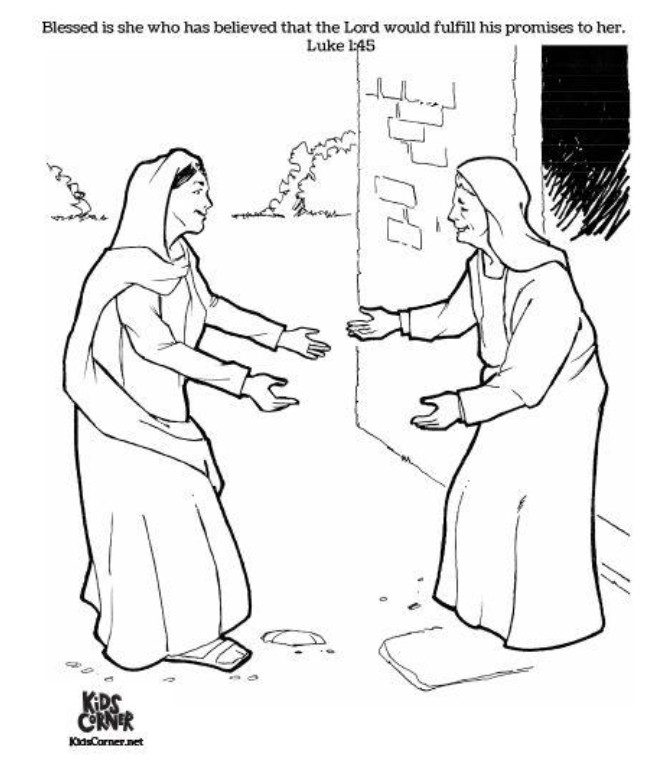
Luke 1:39-40 (Mary’s Actions)
In those days Mary set out and went with haste to a Judean town in the hill country, where she entered the house of Zechariah and greeted Elizabeth.
John 19:25 (Mary’s Presence at the Cross)
Meanwhile, standing near the cross of Jesus were his mother, and his mother’s sister, Mary the wife of Clopas, and Mary Magdalene.
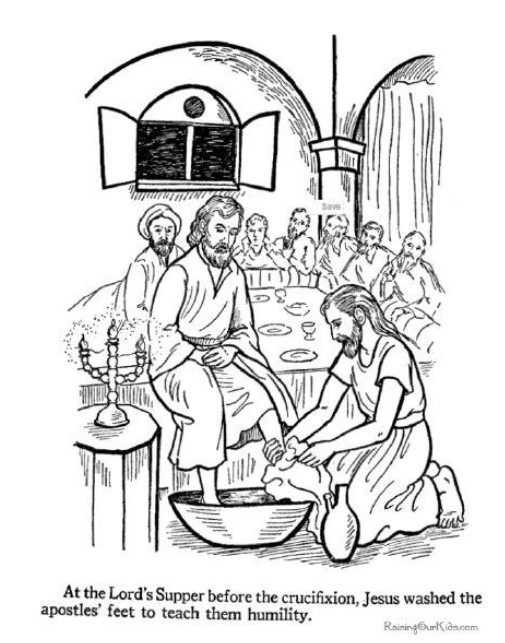
John 13:3-5 (Jesus Washing Feet)
Jesus, knowing that the Father had given all things into his hands, and that he had come from God and was going to God, got up from the table, took off his outer robe, and tied a towel around himself. Then he poured water into a basin and began to wash the disciples’ feet and to wipe them with the towel that was tied around him.
http://www.easter-coloring.com/pages/religious/002-christian-easter-colo...
Silence of Signs in Prayers
Practicing silence of signs during prayer can include a basic awareness of our body language and posture during moments of prayer, as well as expressing our prayers through intentional signs and movements. For example, I have always been taught that there is no single “right way” to pray. I interpreted that to mean I could kneel, sit, stand, lie down, or otherwise choose my posture. Recently, however, a few prayer leaders I’ve been with have encouraged groups to sit comfortably, but place both feet on the floor and truly “ground” our bodies in preparation for prayer. It is a great way to become aware of our physical body and acknowledge a willingness to let go of other distractions or expectations in order to fully focus on prayer. When we say a decade of the rosary as a family, we encourage our 3-year-old son to sit up on the couch with his legs straight out instead of lying down or acting goofy.
There are other intentional movements we can engage in so as to pray. A family shared with me how they trace the sign of the cross on one another’s forehead during prayer. I also know families who do this in the morning before each person leaves the house, as a way to bless one another on the day’s journey. Offering signs of peace during Mass, but also during informal times of prayer, can be a way to see and connect to God in family members and friends.
Quiet prayers of meditation can be enhanced through walking a labyrinth, running, hiking, or other practices such as yoga. I recently have started a short-term yoga class twice a week. Not only do we offer an intention for our practice at the beginning of each session, but the whole experience helps me focus on the movements of my body. This focus and awareness continues even after I leave the yoga class. Throughout the day I think about how I walk, move, sit, stand, and experience energy or pain in my body.
As your family develops or continues your prayer habits, think about how you might incorporate signs that bring you closer to Christ, whether it is a sign of the cross, a sign of peace, or simply being intentional about how you sit and move during prayer. Taking time to truly look one another in the eye and recognizing God in each person also can be a powerful sign of presence to one another.
Silence of Signs in Media
These videos, songs, and movies resonated with different aspects of this virtue. Your family can watch, listen, dance, or discuss.
Videos
Amy Cuddy on how body language can change your future (2:45): https://www.youtube.com/watch?v=7qcaVScfiUI (Accessed 8/10/18)
Amy Cuddy challenges us to stand in power postures for 2 minutes each day to increase our confidence.
- Over the next few days, consciously stand or sit in these power poses wherever you are (at home, school, work, etc.). Notice and then discuss if it changes the way you feel and the way you interact with and are present to other people.
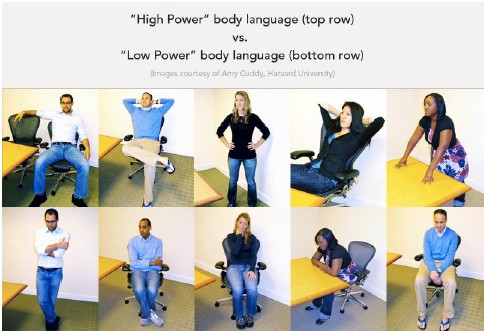
- When are times when you want to be more present to those around you? How can your body language help you do so?
Songs
“Hills and Valleys” performed by Tauren Wells: https://www.youtube.com/watch?v=8iDuZv_5MQk (Accessed 6/23/18)
- When were times when things seemed to be going really well and you were standing “on a mountain”? Do you remember to bow and thank God for your blessings and those who helped you get there?
- When were times when you felt that you were in a valley? Do you remember to raise your eyes to pray to God, to ask for help, and to realize you are not alone?
Just dance!! Have a family dance party. What better way to glorify God and express gratitude for our bodies and our ability to move!
- “Can’t Stop the Feeling” performed by Justin Timberlake, from the movie Trolls: https://www.youtube.com/watch?v=oWgTqLCLE8k (Accessed 6/23/18)
- “Better When I’m Dancin’” performed by Meghan Trainor: https://www.youtube.com/watch?v=pkCyfBibIbI (Accessed 6/23/18)
Movies
Tangled: “Rapunzel Leaves the Tower”: https://www.youtube.com/watch?v=5NGcpRvN2v4 (Accessed 6/22/2026 by NACMS personnel)
- What do you notice about Rapunzel’s body language as she experiences different feelings about leaving her tower?
- What does Ryder’s body language tell you about how he is feeling?
- Think about your own body language today? Did it change based on how you were feeling?
Beauty & the Beast: “Something There”: https://www.youtube.com/watch?v=V2QrZz-n1Uk (Accessed 6/22/2026 by NACMS personnel)
- Describe some of the Beast’s facial expressions and body language throughout the song. What do you notice about them? How do they affect his interactions with Belle?
- Describe some of Belle’s nonverbal communication throughout the song. What do her facial expressions and body language communicate? How does it make you feel?
Silence of Signs in Family Activities, Holiday Traditions, and Celebrations
In addition to our individual expressions and signs, families often have rituals, traditions, and important behaviors that are vital to teaching and developing the virtues of Jesus.
Examples of signs and activities in which the whole family participates include eating meals together, having Family Nights, taking family vacations, and establishing or continuing traditions around times of celebration. All of these examples require time, planning, and commitment, but not necessarily a lot of money. Spending time together as a family in these or other ways is a sign that your family values quality time and the relationships that can be nourished during that time.
Meals
Author Sally Clarkson shares some startling statistics about family meals, saying, “The average time spent at a dinner table has shrunk from ninety minutes in the middle of the last century to less than twelve minutes today…. Kids and teens who share fewer than three family dinners each week are less likely to eat healthier foods and more likely to be overweight, perform poorly academically, engage in risky behaviors…and have poor relationships with their parents.” [14] This is true in homes regardless of religious beliefs because people are busy and time is limited. Families surveyed for this project shared the following insights when asked about their approach to family time and meals together.
“Mealtime at the table is important to us. There are times it is tough, with schedules and activities. We eat breakfast together at the table in the morning. Sometimes we are in various stages of getting ready, but we try to all be together for some time around the table. Dinner is usually together at the table if we are all there.”
“We eat at the dinner table as many nights as possible with no electronics.”
“Meals are a central part of family time in our home. Everyone helps with cooking and cleaning up even from a young age. We are creative with what we eat and keep it fun. We pray before every meal, rotating turns on who leads. We talk about all kinds of things.”
“We try to have dinner together as a family every night; we usually succeed at having it 5 out of 7 nights. At dinner, each person shares what the best part of their day was, even the 2-year-old, and we really stress the importance of listening to the other people when they share and asking questions to learn more about what they are saying. No electronics at meals. When we are home on weekends, etc., we make it a point to eat all meals—lunch and breakfast—together as well.”
Family Nights
“Most families have pretty complex schedules during the active parenting years…. It is precisely because we are going in so many different directions, however, that saving one night a week to be home together is important.” [15] In her book, Susan Vogt shares some simple examples of family nights, including “watching a TV show together, playing a board game, doing a puzzle, taking a bike ride or a walk, or going out for ice cream,” as well as giving each child an individual date night with one parent on a regular basis for more personal quality time. Because our children are still younger than four, most of our intentional family time is spent at playgrounds, splash pads, and libraries. Occasionally we will plan something more elaborate and adventurous, like camping or a trip to the zoo or children’s museum, but those also cost money, so often simple and free is preferred.
Other families shared these ideas they follow for family activities:
“Movie nights selecting Christian movies.”
“Fridays are family night as much as possible. We normally have dinner and just spend time together.”
“We try to do family activities that are age appropriate and fit in our schedule. We try to make sure we have at least one ‘family activity’ planned for each weekend, so we do not become completely consumed by house projects, etc. We do not always get to take vacations; when we do, we try to make it very family centered.”
“We both work a lot right now on variable schedules that include our evenings, so we don't have specific scheduled family time together. We do walks together around the neighborhood after dinner as often as we can, and each parent has a different rhythm of having time with our daughter when the other is working.”
Holidays
Families shared these traditions they follow during holidays to make sure the spirit of the season remains as the focus rather than material distractions.
Advent and Christmas
“For Advent, we have an Advent wreath at dinner and say special prayers.”
“We take Mary and Joseph on a journey through our house to get to the stable. We start the first day of Advent and end on Christmas Eve. Kids move them every day and then write a story about their journey—this has gone better in some years than in others.”
“At Christmas we often host a caroling party called the Baby Jesus Shower where we invite friends to share a chili supper, carol in the neighborhood, and play games in the night. People bring diapers to donate to local organizations.”
“We decorate gingerbread houses, go caroling with the Marianist Family, spend time with family, and make cookies. We try to work with the kids to make at least one homemade gift each year, too.”
“Buy four small or practical gifts for each child following the motto: ‘Something you want, something you need, something to wear, and something to read.’”
Lent and Easter
“During Lent, along with giving up something, we also try to think of things we could be doing better—maybe not arguing as much with a sibling or trying to be kinder and having more patience with a classmate or coworker.”
“We usually limit electronics is at night and do more quiet time and reflection as a family in the evening.”
“We give faith-based books and a treat for Easter.”
Halloween
“We love Halloween. We get dressed up and enjoy dinner with our neighbors before sitting on our porch to pass out candy. It is a great communal event and, so far, is a fun way for our little one to practice giving and sharing joy.”
Birthdays
“We celebrate birthdays and make sure the birthday person gets a cake or, now that they are out of the house, a phone call.”
Sources and Notes:
- Susan Vogt, Raising Kids Who Will Make a Difference (Chicago, IL: LoyolaPress, 2002), xiii, xv.
- Pope Francis, The Joy of Love (Boston, MA: Beacon Publishing, 2015), 216.
- Quentin Hakenewerth, SM, A Manual of Marianist Spirituality (Dayton, OH: NACMS, 2000), 42.
- Quentin Hakenewerth, SM, Growing in the Virtues of Jesus (Dayton, OH: NACMS, 2008), 20.
- Hakenewerth, Growing in the Virtues of Jesus, 22.
- Pope Francis, The Joy of Love, 101-102.
- All Scripture passages are taken from New Revised Standard Version (NRSV) of the Bible.
- Pope Francis, The Joy of Love, 218, 248.
- “5 Great and Quick Prayers Before Meals,” Beliefnet, Inc., accessed June 23, 2018.
http://www.beliefnet.com/faiths/christianity/galleries/5-great-quick-pra.... - Jennifer, “Thirty Words of Affirmation to Share with Your Kids,” The Intentional Mom (blog), May 13, 2016, https://www.theintentionalmom.com/30-words-of-affirmation-to-share-with-...
- Joseph H. Lackner, SM, Virtues for Mission (Dayton, OH: NACMS, 2003), 14.
- Bernard Lee, SM, Habits for the Journey: A Mystical and Political Spirituality for Small Christian Communities (Dayton, OH: NACMS, 2000), 56.
- Sally Clarkson, The Lifegiving Table (Carol Stream, IL: Tyndale House Publishers, Inc., 2017), 6.
- Clarkson, The Lifegiving Table, 13.
- Vogt, Raising Kids Who Will Make a Difference, 40.